
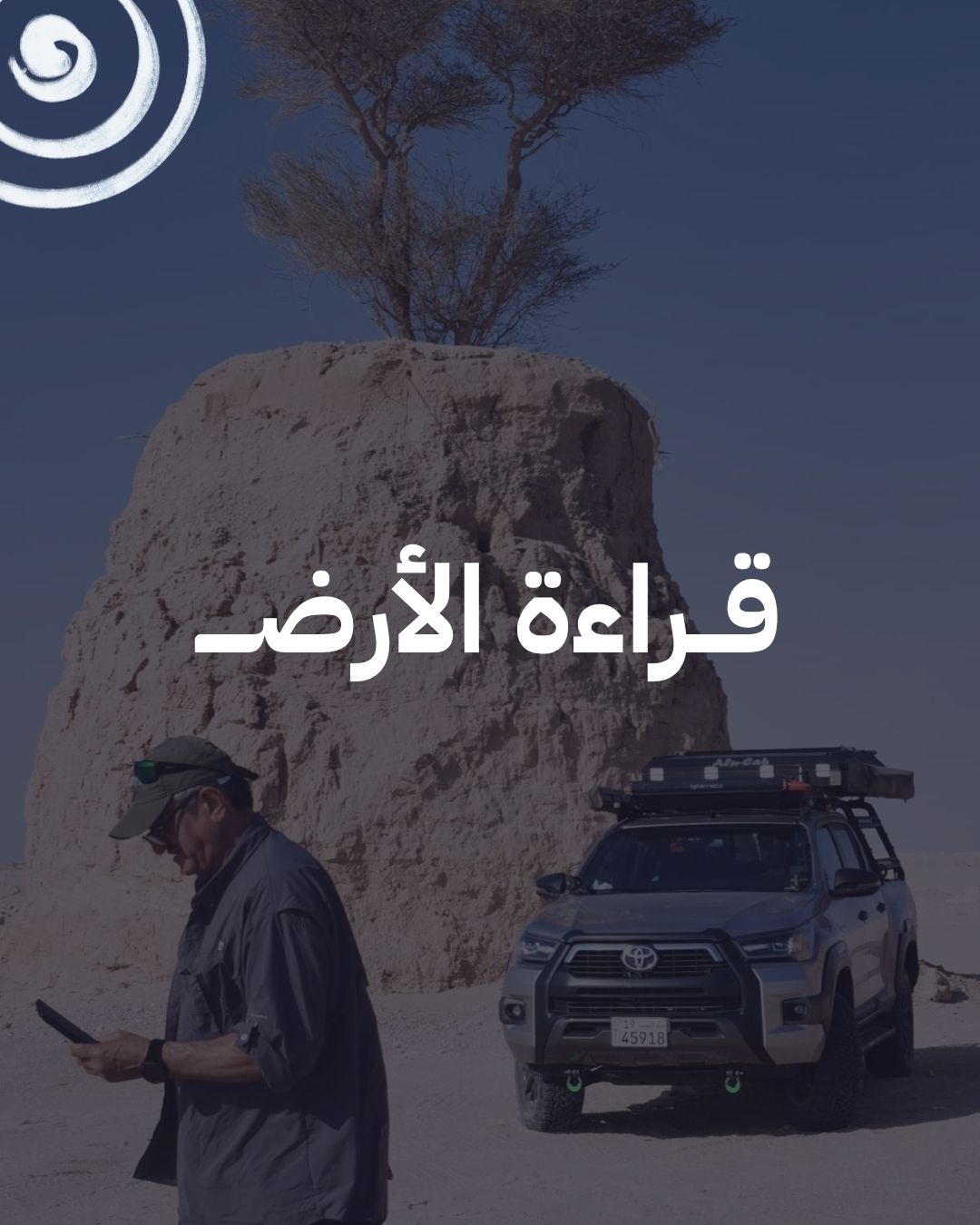
Intro to Digital Exploration & Terrain Reading
Reading the Land
📍Sukoon, Sanabil Tower, Kuwait City.
Terms and Conditions
Adventure Activity Participation Agreement
(Day Trips & Mainland Kuwait Experiences)
Effective Upon Purchase
This Adventure Activity Participation Agreement (“Agreement”) is entered into between AlMaknoon (“the Company”) and any individual (“Participant”) who books, purchases, or participates in any day trip or overnight experience conducted within mainland Kuwait.
By completing a booking or participating in any activity, the Participant confirms that they have read, understood, and fully agreed to all terms and conditions set forth herein, without the need for any additional signature.
1. Activity Description
The Company organizes guided outdoor and adventure experiences within mainland Kuwait, including but not limited to:
-
Day kashtas
-
Overnight camping trips
-
Hiking and walking experiences
-
Off-road and desert activities
-
Nature, cultural, and educational outings
Specific activity details, locations, duration, inclusions, and requirements are defined in the product description at the time of booking.
The Company reserves the right to modify routes, schedules, meeting points, or activities when required for safety, weather, environmental, or operational reasons.
2. Payment & Acceptance
-
Full payment is required at the time of booking.
-
No reservation is confirmed without full payment.
-
Payment constitutes full and unconditional acceptance of this Agreement.
3. Attendance, Timing & Responsibility
3.1 Mandatory Check-In
Participants must be present at all mandatory meeting and check-in points communicated prior to the activity.
Failure to attend mandatory check-ins may result in removal from the experience with no refund or credit.
Attendance at optional activities is not mandatory and does not affect refund eligibility.
3.2 Cut-Off Times & Late Arrival
All activities operate on strict schedules to ensure safety, security, and fairness to Participants who arrive on time.
Each activity has a clearly defined cut-off time, communicated in advance.
Participants who arrive after the designated cut-off time:
-
May be denied participation at the Company’s sole discretion
-
Will not be accommodated or waited for
-
Forfeit their booking entirely, with no refund or credit
Late arrival does not obligate the Company to delay the group, adjust the itinerary, or compromise safety or the rights of punctual Participants.
3.3 Early Departure & Self-Responsibility
Participants who choose to leave the activity or group earlier than the scheduled end time, or before the time designated by the Company, do so entirely at their own discretion and risk.
Many activity locations are remote, off-grid, or environmentally sensitive.
In such cases:
-
The Company immediately refrains from all responsibility, including safety supervision, navigation support, emergency coordination, or recovery
-
The Company is not obligated to escort, guide, track, or assist Participants who leave early
-
Any incident, accident, delay, getting lost, vehicle damage, or emergency occurring after early departure is the sole responsibility of the Participant
Early departure does not qualify for any refund, credit, or compensation.
4. Assumption of Risk
Outdoor and adventure activities involve inherent risks, including but not limited to physical injury, environmental exposure, uneven terrain, vehicle movement, weather changes, and the actions of other participants.
The Participant voluntarily assumes all risks, whether known or unknown.
5. Waiver and Release of Liability
To the maximum extent permitted by law, the Participant releases and holds harmless the Company, its owners, guides, employees, contractors, and affiliates from any claims, damages, losses, or liabilities arising from participation, including those resulting from negligence.
6. Medical Fitness
Participants confirm that they are medically and physically fit to participate.
It is the Participant’s responsibility to disclose any medical condition that could affect participation.
The Company bears no responsibility for issues arising from undisclosed conditions.
7. Conduct, Safety & Zero-Tolerance Policy
7.1 Prohibited Items
The following are strictly prohibited at all times:
-
Alcohol
-
Shisha
-
Illegal drugs
-
Any intoxicating or mind-altering substances
7.2 Smoking Policy
Smoking is permitted only in designated areas away from camps, tents, bonfires, and group gathering areas.
7.3 Accommodation & Tent Sharing (Overnight Trips)
Tent sharing is prohibited unless Participants are from the same immediate family or are legally married.
7.4 Inappropriate Behavior
Any unsafe, aggressive, disrespectful, or disruptive behavior may result in immediate removal from the activity without refund or credit.
7.5 Camp Area Security (Overnight Trips)
Camping areas and tent placements are designated by the Company for safety and security.
Participants are prohibited from moving tents or creating private or isolated camping areas.
Any incident occurring outside designated camp areas is the sole responsibility of the Participant.
7.6 Independent Movement Outside Activity Scope
Participants who choose to drive independently, walk away from designated areas, or separate from the group do so entirely at their own risk.
The Company bears no responsibility for accidents, injuries, delays, vehicle damage, getting lost, or being stuck as a result of independent movement.
7.7 Intoxication & Authority Notification
Any suspicion or confirmation of intoxication will result in immediate removal from the activity, possible notification of relevant authorities, and no refund or credit.
7.8 Identity Verification
For security and operational reasons, the Company may request a valid Civil ID or government-issued identification at any time.
Failure or refusal to provide identification may result in removal from the activity without refund or credit.
7.9 Carpooling & Personal Belongings
When carpooling is arranged:
-
Vehicle owners may inspect bags or personal items
-
Vehicle owners may refuse transport at their discretion
-
Personal items may not be transferred between vehicles without owner approval
7.10 Participant Vehicle Responsibility (Off-Road Trips)
Any Participant joining an activity using their own vehicle expressly acknowledges and confirms that:
-
Their vehicle is a 4x4 capable vehicle, suitable for off-road terrain
-
Their vehicle is in good mechanical condition and fit to participate
-
Their vehicle is equipped with all necessary off-road and recovery equipment, including:
-
Tire deflation tools
-
Tire inflation systems (air compressor or equivalent)
-
Proper recovery points
-
Tow straps and basic recovery gear
-
-
They are fully familiar with their vehicle’s 4x4 systems and how to use them correctly
The Participant further acknowledges that:
-
Deflating tires, inflating tires, and vehicle recovery are solely the Participant’s responsibility
-
AlMaknoon guides will not provide, lend, or share recovery gear or vehicle equipment
-
Participants may not rely on equipment from other Participants
Participants must arrive fully prepared with a self-sufficient vehicle.
The Company bears no responsibility for vehicle damage, mechanical failure, recovery delays, or losses caused by lack of preparation or experience.
All off-road driving must strictly follow AlMaknoon guide instructions.
7.11 Off-Road Assistance Fee & Non-Compliance
Participants must strictly follow AlMaknoon guide instructions during off-road driving.
If a Participant:
-
Fails to follow instructions
-
Drives unsafely or against guidance
-
Causes their vehicle to become stuck or unsafe due to non-compliance or poor judgment
Any assistance or intervention required as a result shall be subject to a fixed assistance fee of 50 KWD per incident.
This fee covers:
-
Recovery coordination
-
Trip delays caused by non-compliance
-
Additional safety risk management
This fee does not include towing, third-party recovery, repairs, or vehicle damage.
The Company may collect the fee on-site or after the activity and may restrict future participation.
8. Strict Cancellation & Refund Policy
8.1 General Rule
-
No cash refunds under any circumstances
-
Any flexibility is provided strictly as credit
8.2 Participant-Initiated Cancellations
Cancellations made more than 8 days before the trip date:
-
No cash refund
-
Credit of up to 50% of the booking value
-
Credit valid for 14 days
-
Issued at the Company’s sole discretion
8.3 Cancellation Usage Limits (Rolling 2-Month Window)
Within any rolling two (2) month period:
-
First cancellation → up to 50% credit
-
Second cancellation → up to 25% credit
-
Third or more → 0% credit
8.4 Late Cancellations & No-Shows
Cancellations made 8 days or less before the activity date, including no-shows, are non-refundable with 0% credit.
8.5 Early Exit
Leaving after the activity starts results in no refund, no credit, and no compensation.
9. Company-Initiated Changes or Cancellations
The Company may cancel or modify activities for safety, weather, or operational reasons.
Participants will receive a full-value credit voucher valid for 12 months.
Cash refunds are not guaranteed unless required by Kuwaiti law.
10. Force Majeure
The Company is not liable for disruptions caused by events beyond its control, including extreme weather or government actions.
11. Governing Law & Jurisdiction
This Agreement is governed by the laws of the State of Kuwait, with exclusive jurisdiction in the courts of Kuwait City.
12. Entire Agreement
This document constitutes the complete and final agreement between the Company and the Participant and supersedes all prior communications.
The version in effect at the time of booking applies.
By purchasing this experience, you automatically accept AlMaknoon’s Adventure Activity Participation Terms & Conditions.
Reading the Land
The Story Behind Reading the Land
Every field journey begins before the car moves.
It begins when you look at a map and ask:
Where did the water move?
How was this land shaped?
Where can vehicles move safely?
What might be interesting here?
Where might life gather?
Why did people in the past choose one route over another?
At AlMaknoon, we do not choose a place only because it looks beautiful.
We try to understand it.
The land speaks through its forms:
A dry channel.
A moving dune.
An alluvial fan.
A depression.
A coastal edge.
An old track.
A water trace.
A shift in soil color.
A shadow in satellite imagery.
Reading the Land teaches you how to begin noticing these signals.
Maybe you use it later to plan a route.
Maybe it helps you understand Kuwait more deeply.
Maybe it becomes the first step before joining one of AlMaknoon’s field experiences with a different eye.
Reading the Land is not a dry technical class about maps.
It is an introduction to the way AlMaknoon thinks: how we look at land before entering it, how we read satellite imagery, how we connect terrain with water and movement, and how we choose points of interest and routes with more awareness.
Before every field experience, there is a quiet stage people do not usually see.
We open the map.
We read the lines.
We search for water traces.
We observe dune shapes.
We compare images.
We place points.
We plan a route.
And we ask: why does this place matter, and why might people, animals, water, or vehicles move through here?
In this workshop, you enter that world.
You are not paying only to learn a mapping app. You are entering the mindset of exploration: how to see land as a story, a system, and a possible route.
-Basics of digital map reading
-The difference between decimal coordinates and degrees/minutes/seconds
-How to copy and share coordinates correctly
-How to place a point of interest on a map
-How to identify an area of interest before visiting the field
-How to use satellite imagery to read terrain
-How to notice dunes, alluvial fans, old water channels, and possible routes
-How to plan a simple route using Gaia GPS or similar mapping tools
- How to think about access, distance, safety, and return before heading out
-How to begin building an explorer mindset connected to AlMaknoon’s philosophy
FAQs
🧭 AlMaknoon always strives to offer safe, meaningful experiences. Thank you for adventuring with us!
Do I need previous map-reading experience?
No. The workshop is designed for beginners and curious explorers.
Do I need a 4x4 vehicle?
No. This is an indoor digital workshop, not a field experience.
Is the workshop practical?
Yes. It includes explanation and practical exercises on coordinates, points, satellite imagery, and simple route planning.
Do I need Gaia GPS specifically?
Gaia GPS is preferred because it is useful for exploration, but the concepts can be applied to other digital mapping tools.
Is this a GIS course?
No. This is a practical introduction to reading maps and terrain, not an academic or professional GIS course.
Can I come alone?
Yes. Many participants come alone, and the workshop is suitable for individual guests.
Can I use this for planning my own trips?
Yes. You will learn basics that help you plan more intelligently. However, field safety and final responsibility remain with you when you go outdoors independently.